January 2019
In the debut book of poems by Sonja Mabel McClure, entitled “Shift // Motion” we find a collection of poems divided in six separate chapters that speak about movement: travel, nature, dance, music and passion. It reveals what it means to be free for our, in both body and mind.
– Hello Sonja, thank you very much for this interview. We believe that all people, and particularly people who have a passion for travelling, dance, music, will find in your poems many common feelings. Those feelings can only be described by a person who writes sincerely from the experience.
I would like to start with the first question:
How did you choose the name of your poetry book?
– As a dancer and a traveler, I have always felt motion and movement in the rhythms of my writing and my life. I picked the name from a line that says, “shift to the motion / of traveling,” from the first poem “Throttle.” It sums up the feeling I wanted to convey for the book.
– In the biography of your book you tell us that you practice belly dance and we even see in the poetry «Cymbalism» that you speak about tribal dance. Why specifically do you like this kind of dances?
– I enjoy many different styles of belly dancing. Tribal dance, in particular, is very intriguing to me. It has such a modern appeal and I like the way it blends other dance genres into the more traditional belly dance methods. It incorporates choreography from everything like break dancing all the way to ballet.I adore the darker color palette that the tribal wardrobe embraces, as well as the embellishments of coins, shells and tassels as opposed to the more flashy beads and sequins of Egyptian style costumes.
I am also compelled with studying ATS (American Tribal Style) which is a specific type of improv dance, where you learn a set list of dance vocabulary but the order of dancing the moves is completely spontaneous. I’ve had the privilege of learning this technique from my mentor and teacher Amina. It’s been a great accomplishment to complete the first few levels of this style. I’m so fortunate that I’ve been able to perform ATS multiple times with a small group of talented dancers.

Sonja Mabel McClure and J. Jaye Boulter. (Photo: Tanner Maxwell)
– Your poetry book is divided in 6 parts, right? And in part number 6 you describe two persons. Are they your parents? Did they influence your vision of poetry and movement?
Yes, my poetry book is split into several different chapters. The poem at the end of the book “Pass it On,” is a tribute to my parents. They’ve always supported my artistic abilities and endeavors by encouraging me to pursue my love for writing, dancing and the Arts. My dad is also a poet and both of them are artists. They are avid readers like myself. My mom loves to say to me, “to be a good writer, you must read a lot.”
– You currently live in Utah, United States. Have you lived in other cities? Which countries do you know?
I have lived in Utah for a number of years. I’ve also had residency in: Vermont, California, Wyoming, Washington, Montana and Oregon. I’ve had the pleasure of traveling across the globe to many exciting destinations. In my travels, I was most impressed by the beautiful beaches in places such as: Spain, Portugal, Costa Rica, Hawaii and the Virgin Islands. While I was in Spain, I took a boat across the Straight of Gibraltar into Morocco for a short and fascinating trip.
– When you are writing poetry, when do you know that it is finished?
– Good question. I find it difficult at times, to decide when my poetry is complete. It’s the way a piece flows and how cohesive it is. Sometimes, I just have a slight concept but I’m not sure how I will develop it and other times, it’s just editing a word or two or choosing a title that I struggle with.
– What do you think about the diffusion of poetry nowadays? We want to know your opinion about the modern ways of publication and dissemination of poetry. That means how the distribution and publication work in our days as an independent writer or with an editorial (sales online, bookstores, diffusion in social networks, etc.). Has it been complicated to you to publish and distribute your book in this context?
Big progress is happening in the realm of independent publishing. Self-publishing is expanding in a way that was non-existent 10-20 years ago. Social media has played a role in gaining and expanding readership. The market for distribution is monopolized by a few corporations. I prefer purchasing books from small press publishers and independent bookstores as often as possible. It’s invigorating to have my book available on the shelf of local vendors that I’ve been supporting for years.
– How was the process of creating the cover of your book and why did you choose it? There are two covers for the same book, right?
– I had an artist paint the illustrations for my book and it was a wonderful process. She created an amazing variety of vibrant art for me to choose from. The artist and I came up with the concept of an aerial view of nature. Then we left the interpretation of the artwork open to the viewer. Asking, what do you see? Whether it’s tree branches, rivers or roads.
Yes, I do have two different covers for my book. I wanted to differentiate between the standard and the limited edition.

Cover of the book «Shift / / Motion» by Sonja Mabel McClure – Designed by J. Jaye Boulter.
– When organizing ideas and writing, do you do it mainly for yourself or do you think about your potential readers?
Both, I suppose. It depends on the piece. Some of what I write stems from personal experience and is a healing process, but I do hope that others can find comfort knowing they’re not alone if they share similar feelings. Sometimes, my poems can be more open ended. I let the reader study the poem and come to their own conclusion whatever that may be. Other times, I have a specific message I’m trying to convey, so I am definitely thinking about how my potential readers will interpret what I write.
– Your poems are written in English, but this interview will be published in Spanish. Probably some people who come from Hispanic countries will see the video or read this interview and feel curious. They cal also feel identified with what you transmit in your poetry. Have you thought that your poems could have an international character?
It is truly an honor to have my poetry translated and presented to a broad audience. I would have never imagined that people would be interested in reading my poetry worldwide.
– You have the advantage of using a globally used language, English. Would you like your poems to be translated into other languages? Or do you think that when there is a translation into another language they would lose their meaning?
It is possible that some words or imagery could get lost in translation but for the most part, I think it’s an amazing compliment to read your work in another language.
– If you could give a single advice to a child, what would it be?
– Believe in yourself, make your own plan and go after it. Don’t rely on anyone else to make your dreams come true.
– What question would you have wanted us to ask you and we have not asked you?
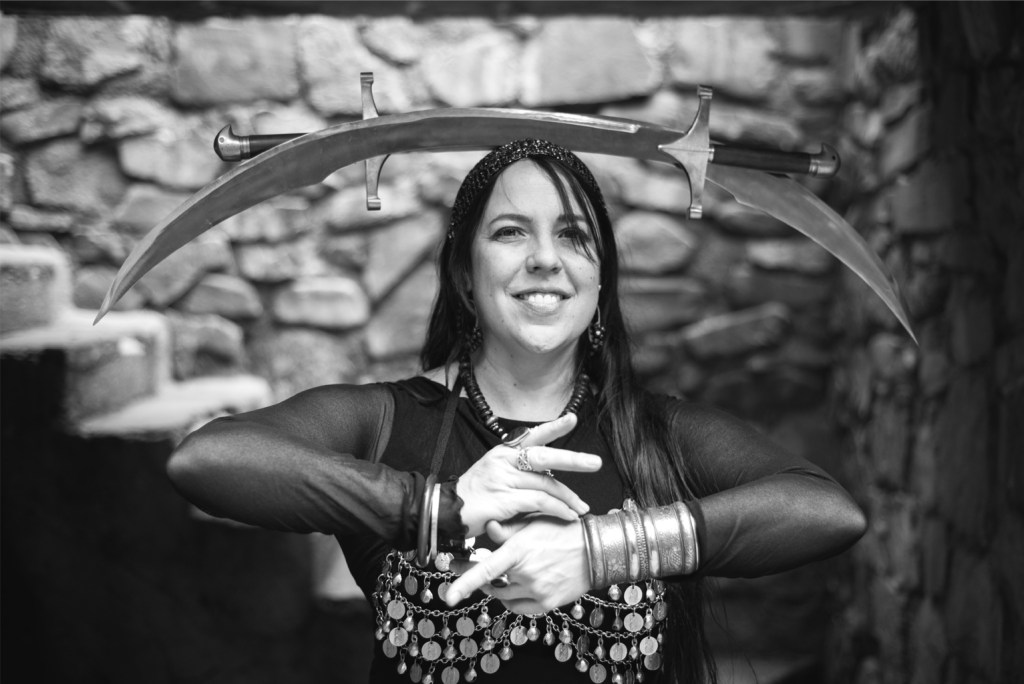
– As a belly dancer, I would like to discuss my preferences for dance a little more extensively. The veil, basket and fan are a few fun props I like to use when I’m on stage but dancing with a sword is my absolute favorite. Not long ago, I participated in a double sword intensive training. During that time, I gained the ability to balance both swords on my head while dancing and spinning. It’s been one of the most rewarding challenges for me as a dancer.
– If a person wants to buy your book or contact you, how can he or she do it?
You can connect with Sonja Mabel McClure on Instagram: @sonjasolstice and at http://www.goodreads.com.

 ARTEMAGNUM
Deja un comentario